
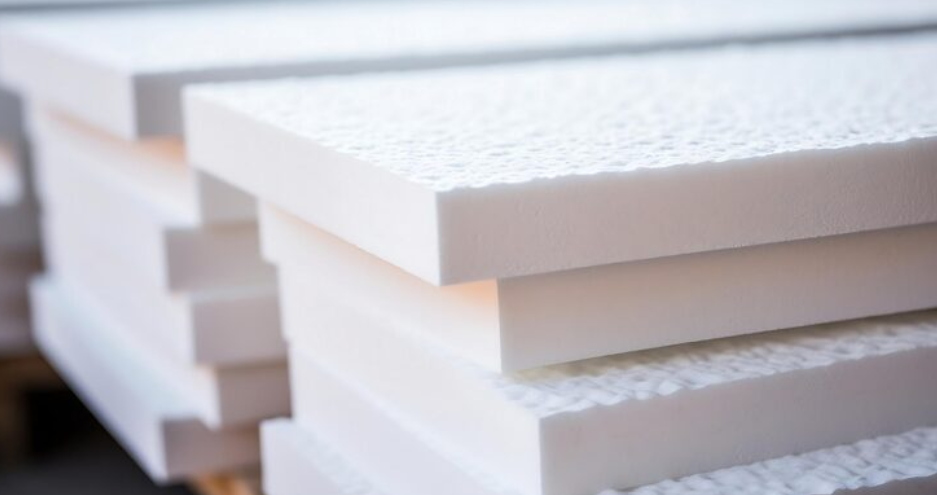
Modern construction projects often require materials that are lightweight, strong, and easy to work with. Geofoam has become a useful solution for many civil engineering and building applications because it can reduce the amount of weight placed on the ground. ASTM D6817 geofoam refers to rigid cellular polystyrene geofoam that meets the requirements of ASTM D6817/D6817M. The specification covers important properties such as density, dimensions, compressive resistance, and flexural strength.
What Is ASTM D6817 Geofoam?
ASTM D6817 geofoam is a rigid cellular polystyrene material designed for use in geotechnical applications. It can be produced from expanded polystyrene (EPS) or extruded polystyrene (XPS), depending on the product and manufacturing process. ASTM D6817 provides requirements that help define the physical properties and dimensions of suitable geofoam products.
Because geofoam is much lighter than traditional soil or other fill materials, it can be used where reducing ground pressure is important. This makes it useful when engineers need to manage loads while creating stable foundations, embankments, or other structures.
Reducing Loads on the Ground
One of the main advantages of ASTM D6817 geofoam is its low weight. Traditional soil fills can place considerable pressure on weak or compressible ground. Replacing some of this fill with lightweight geofoam can reduce the overall load transferred to the underlying soil.
This approach can be especially useful on soft ground or in projects where settlement needs to be carefully managed. EPS geofoam is used in applications such as roads, highways, railway systems, and other civil engineering projects where lightweight fill can provide practical design benefits.
Supporting Efficient Construction
Construction efficiency is another reason engineers may consider ASTM D6817 geofoam. The material is supplied in blocks or panels that can be arranged according to project requirements. Its lightweight nature can make handling and placement easier than moving large quantities of conventional fill.
Using lightweight fill can also help reduce the amount of heavy soil that must be transported and placed. This can support a more organized construction process when the material is properly selected and installed according to the project’s engineering requirements.
Applications in Modern Projects
ASTM D6817 geofoam can support a wide range of construction applications. It is used in road and highway construction, slope stabilization, retaining wall systems, railway projects, and certain building applications. It can also be used beneath structures where lightweight fill or insulation-related performance is part of the design.
The appropriate type of geofoam depends on factors such as expected loads, site conditions, and design requirements. Engineers can use the properties specified under ASTM D6817 to select a product that matches the needs of a particular project.
Importance of Proper Design
Although ASTM D6817 geofoam defines important material properties, the standard does not provide the complete layout, placement, or workmanship requirements for a project. These factors must be addressed through proper engineering design and construction practices.
Environmental exposure, concentrated loads, chemicals, thermal performance, and buoyancy may also need consideration during project planning. This ensures that the geofoam is suitable for the conditions in which it will be used.
Conclusion
ASTM D6817 geofoam provides modern construction projects with a lightweight and engineered material for managing ground loads and supporting different geotechnical applications. Its defined physical properties help engineers select suitable products for specific project requirements. When combined with careful design and proper installation, ASTM D6817 geofoam can contribute to efficient, practical, and well-planned construction solutions.