A limited work wardrobe can still produce plenty of polished outfits when each item earns its place. The goal isn’t owning more clothing. It’s choosing pieces that coordinate easily, fit well, and can shift between meetings, ordinary desk days, and after-work plans without looking repetitive.
Build Around Pieces That Work Together
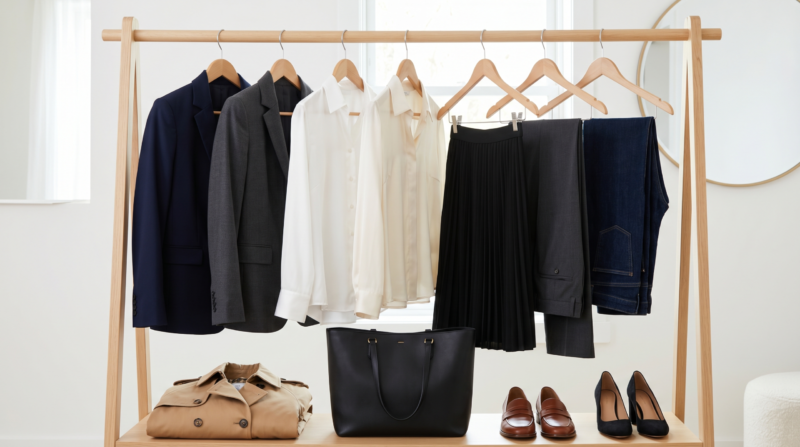
Start with a small group of neutral trousers, skirts, jackets, and tops that share compatible colors. Navy, charcoal, black, cream, tan, and soft gray are easier to rotate than highly specific shades that only match one other garment.
Think in outfits rather than individual purchases. A blouse that works with three pairs of trousers is more useful than a striking top that only looks right with one skirt.
Give Every New Item Multiple Jobs
Before adding something, picture at least three work outfits you can create with it. This simple test prevents your closet from filling with isolated pieces that rarely leave the hanger.
| Wardrobe Piece | Useful Pairings | Practical Role |
|---|---|---|
| Neutral blazer | Dresses, trousers, jeans | Adds structure |
| Plain blouse | Skirts, pants, jackets | Easy base layer |
| Straight trousers | Shirts, knits, blazers | Reliable work staple |
| Simple loafers | Pants, skirts, dresses | Flexible footwear |
Use Layers to Change Familiar Outfits
Layering makes repeated basics feel less obvious. The same plain shirt can look different beneath a cardigan, blazer, sleeveless knit, or lightweight jacket.
People collecting inspiration from beauty and style reading may notice how often successful outfits rely on familiar basics arranged differently rather than entirely new wardrobes. Changing proportions can have as much impact as changing individual garments.
Let Accessories Create the Variation
Accessories are useful because they change an outfit without demanding much closet space. A narrow belt, structured tote, scarf, simple jewelry, or different shoe shape can shift the character of the same trousers and blouse.
Broader outfit inspiration ideas can also help you notice combinations you haven’t tried. The useful approach is to borrow the styling principle, then rebuild it with clothes you already own.
Small changes are often enough. Rolling a sleeve, switching from flats to loafers, or tucking a top differently can make a repeated outfit look intentional instead of accidental.
Use Color Strategically
A compact wardrobe doesn’t have to be dull. Choose one or two accent colors that coordinate with most of your neutrals, then repeat those shades through shirts, knitwear, scarves, or accessories.
Browsing everyday style references can make it easier to identify color combinations that feel current without buying a completely new set of work clothes. The key is maintaining enough consistency that everything still mixes easily.
Where Small Wardrobes Usually Go Wrong
The biggest mistake is buying too many statement pieces. They attract attention in the store but often create fewer wearable combinations at home.
Another problem is keeping poorly fitting basics because they’re considered practical. A plain pair of trousers that pulls at the waist or bunches around the shoes won’t become more useful simply because it’s neutral.
A smaller wardrobe demands better editing. Fit, comfort, fabric condition, and coordination matter more when each piece appears frequently.
Frequently Asked Questions
How many pieces are enough for a work wardrobe?
There isn’t one correct number. A modest collection of interchangeable tops, bottoms, layers, shoes, and one or two smarter pieces can create many combinations when the colors and silhouettes coordinate.
How can I repeat work clothes without looking repetitive?
Change the surrounding pieces. Pair the same trousers with different tops, add or remove a jacket, switch shoes, and vary accessories. Most people notice the overall outfit more than individual repeated garments.
Should every work wardrobe use neutral colors?
No. Neutrals make mixing easier, but accent colors can add personality. Choose shades that coordinate with several existing items rather than colors that require entirely separate outfits.
Make Every Piece Earn Its Space
A limited work wardrobe becomes easier when you stop judging it by item count. Focus instead on how many useful combinations your clothes can create. Remove pieces that rarely coordinate, improve the fit of dependable basics, and build around garments you genuinely reach for. Fewer clothes can produce more options when the wardrobe works as one connected system.