
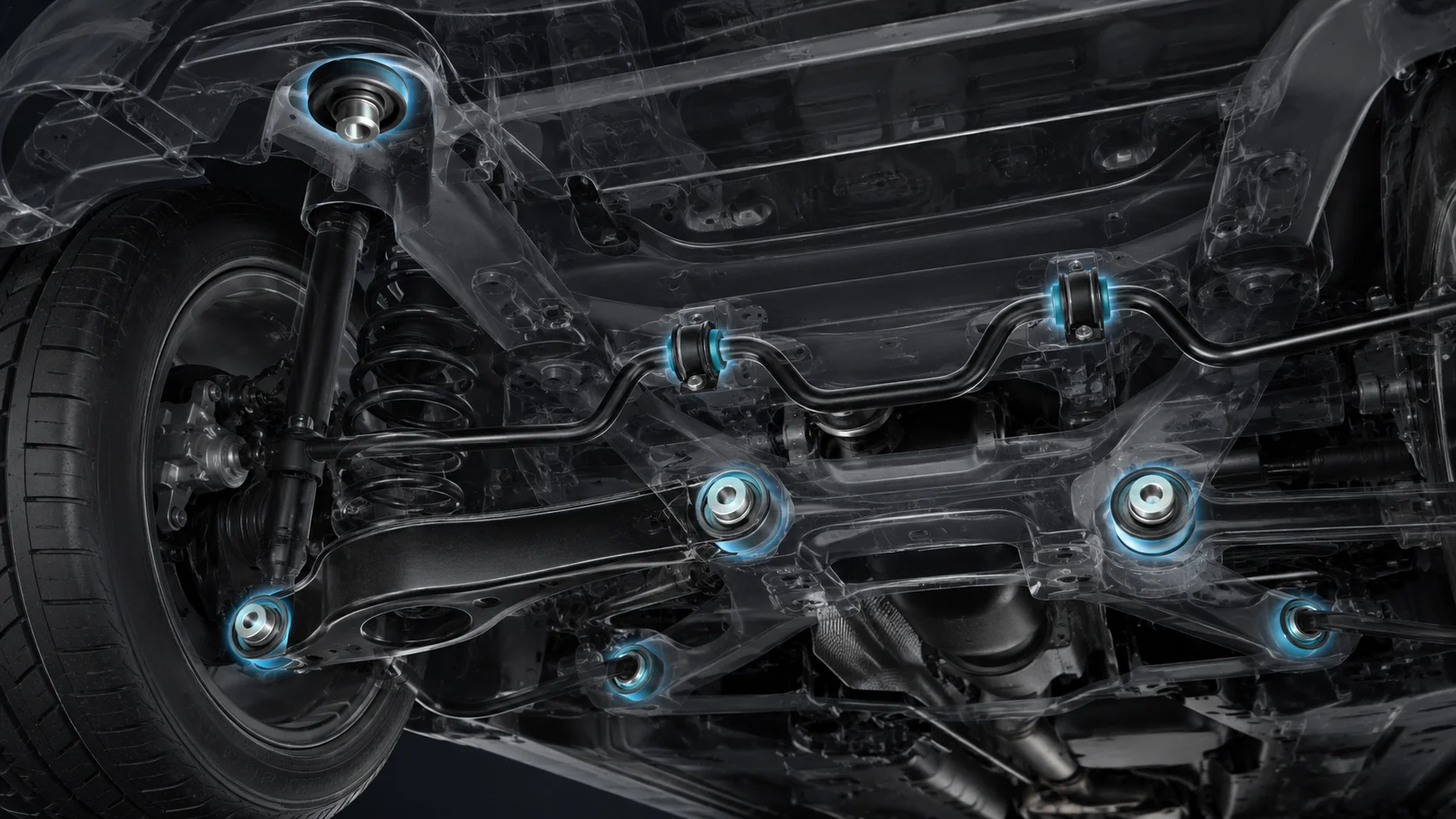
Suspension bushings are small parts, but their condition has a noticeable effect on how a vehicle feels. As rubber or synthetic bushings age, they can crack, soften, or separate, allowing suspension components to move more than intended. The result may be extra noise, vague steering, uneven handling, or a rougher ride.
Replacing worn suspension bushings at the right time can restore tighter control without replacing an entire suspension system.
What Suspension Bushings Actually Do
Bushings sit between metal suspension parts and the vehicle body or frame. They cushion movement while allowing control arms, sway bars, and other components to move through their designed range.
That isolation helps prevent every road vibration from reaching the cabin. Drivers researching general garage maintenance reference material may see bushings mentioned less often than shocks or struts, even though damaged bushings can affect both comfort and stability.
Why Rubber Parts Wear Out
Heat, road salt, oil contamination, dirt, and repeated suspension movement gradually weaken rubber. Age can matter as much as mileage, especially on vehicles that spend years exposed to changing temperatures.
Performance-oriented or heavier vehicles may also place more stress on certain bushings during braking, cornering, and acceleration.
Common Signs of Worn Suspension Bushings
Clunking over bumps is one of the better-known symptoms. The sound may occur because a suspension arm is moving farther than intended after the cushioning material has deteriorated.
Steering can also feel loose or less predictable. Some drivers first notice the problem while following efficient driving topics and trying to understand why their vehicle no longer tracks smoothly on familiar roads.
| Change | Possible Bushing Issue | Driving Effect |
|---|---|---|
| Clunk over bumps | Excess joint movement | More suspension noise |
| Vague steering | Control-arm movement | Reduced precision |
| Uneven tire wear | Alignment movement | Shorter tire life |
| Extra vibration | Lost isolation | Rougher cabin feel |
Why Ride Comfort Can Decline Gradually
Bushing wear often develops slowly. A driver may adapt to increasing vibration or steering movement without realizing how much the vehicle’s behavior has changed.
That gradual decline is why comparisons with newer vehicles or ride quality resources can suddenly make an older suspension feel noticeably less settled. The difference may not come from springs or dampers alone.
Alignment Can Change Under Load
A worn control-arm bushing may allow wheel geometry to shift during braking or cornering. A normal alignment measurement taken while the car is stationary may not always reveal how much movement occurs under road forces.
This can lead to tire wear that returns even after an alignment has been performed.
How Bushings Are Checked
A visual inspection may reveal cracks, torn rubber, separation, or metal-to-metal contact. A technician may also apply controlled force to a suspension component to check for excessive movement.
Not every cracked surface means immediate replacement is necessary. The amount of movement, bushing location, vehicle design, and actual symptoms all matter.
Mistakes That Can Lead to Unnecessary Repairs
Replacing every suspension bushing because one looks aged can become expensive without solving the original complaint. Noise may also come from ball joints, sway-bar links, strut mounts, shocks, or loose hardware.
The opposite mistake is ignoring obvious movement because the vehicle still drives. Excess play can affect alignment, tire wear, braking stability, and the load placed on surrounding components.
Frequently Asked Questions
Can worn bushings cause uneven tire wear?
Yes. Bushings that allow excessive control-arm movement can change wheel alignment while the vehicle is moving. That shifting geometry may contribute to irregular tire wear even if other suspension parts remain usable.
Do suspension bushings need to be replaced in pairs?
It depends on the component and vehicle design. Replacing matching bushings on both sides can help maintain consistent suspension behavior, but the correct approach depends on wear and manufacturer repair procedures.
Can new bushings make a vehicle ride better?
They can if worn bushings are causing excess vibration, movement, or noise. New bushings restore proper isolation and component control, although they cannot correct problems caused by damaged shocks, springs, tires, or other parts.
Restore Control Before Wear Spreads
A worn suspension bushing rarely makes a vehicle undrivable overnight, which is why the problem can remain unnoticed for months. Pay attention to new clunks, steering looseness, tire wear, and changes in ride quality. A focused suspension inspection can identify the failed joint and help restore stable handling without replacing parts that still have useful life.