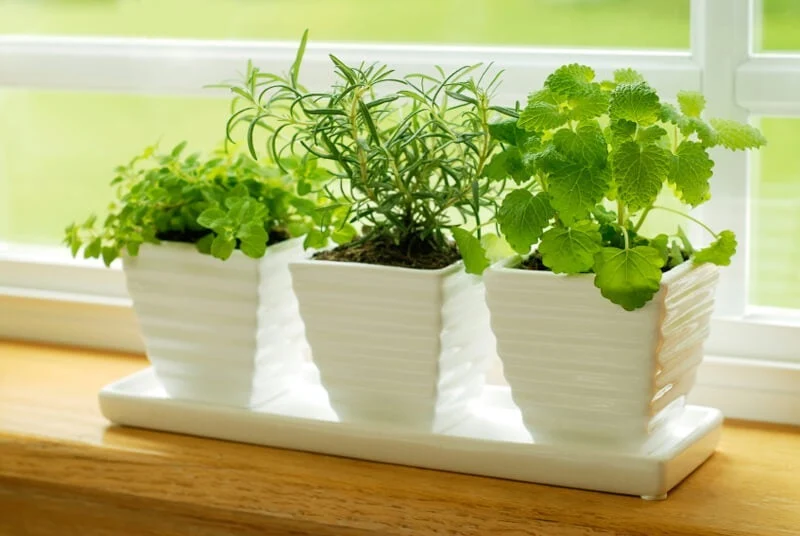
Indoor herbs often weaken because they aren’t getting enough usable light, their roots stay wet too long, or both problems happen together. Pale leaves, stretched stems, slow growth, and constantly damp soil are useful clues.
Before adding fertilizer or replacing the plant, check its growing conditions. Small changes in placement, watering, and drainage often make a bigger difference than adding more products.
Check Whether Your Herbs Are Getting Enough Light
Most culinary herbs perform better in a bright location than in a dim corner. A plant may technically receive daylight while still getting too little intensity to maintain compact, healthy growth.
Watch the plant itself. Long gaps between leaves, stems leaning strongly toward a window, and noticeably smaller new leaves can suggest that the herb is searching for stronger light.
Make Light Changes Gradually
Move a struggling herb closer to a bright window rather than suddenly placing it in harsh conditions for an entire day. A gradual change makes it easier to observe how the leaves respond.
People comparing practical gardening ideas may encounter many different lighting recommendations, but the plant’s actual response should guide the final placement.
Give Roots a Faster Route for Excess Water
Drainage starts with the container. A decorative pot without drainage holes can trap water around the root system, even when the top layer of soil appears reasonably dry.
Using a pot with an open drainage hole gives excess water somewhere to go. Discussions around home-growing perspectives can be useful for gathering ideas, but checking the physical pot is usually the fastest troubleshooting step.
| Plant Clue | Possible Problem | First Check |
|---|---|---|
| Long, thin stems | Low light | Window location |
| Yellowing leaves | Wet roots | Soil moisture |
| Slow growth | Several stresses | Light and roots |
| Wilting in wet soil | Poor aeration | Drainage holes |
Water According to the Soil, Not the Calendar
A fixed watering schedule can create trouble because indoor conditions change. Soil dries differently during warm sunny weeks, cool weather, or periods when heating and air conditioning alter indoor humidity.
Check the upper soil before watering again. General independent home advice may offer useful perspectives, but a finger check or simple moisture observation tells you more about what your particular pot needs today.
Empty Standing Water
A pot that drains correctly can still remain too wet if runoff sits in a saucer or decorative outer container. Empty accumulated water after drainage finishes.
Also inspect whether compacted soil is slowing the flow. If water sits on the surface for a long time, the root zone may need a lighter, better-aerated potting mix.
Improve the Conditions Before Adding Fertilizer
Weak growth often makes people reach for plant food first. That can miss the underlying problem because fertilizer cannot replace adequate light or correct a waterlogged root zone.
Let the plant stabilize before making several changes at once. Adjusting light, drainage, watering, fertilizer, and pot size on the same day makes it difficult to identify which change helped or caused additional stress.
Common Mistakes That Keep Herbs Weak
Overwatering is not simply a matter of pouring too much water at one time. Watering again before the root zone has had enough time to dry can be equally troublesome.
Another mistake is assuming that every indoor herb wants identical conditions. Basil, rosemary, mint, parsley, and other herbs can differ in their tolerance for moisture and strong light. Treating the whole windowsill as one plant often produces uneven results.
Frequently Asked Questions
Why are my indoor herbs tall and thin?
Tall, weak stems commonly develop when a plant stretches toward stronger light. Moving the herb closer to an appropriate bright window and rotating the container occasionally may encourage more balanced growth.
Should I repot an herb that stays wet for days?
Repotting may help if drainage is poor, the soil is heavily compacted, or the container lacks proper holes. First check whether standing water or overly frequent watering is causing the problem.
Can indoor herbs recover after becoming weak?
Many herbs can produce healthier new growth once the underlying problem is corrected. Damaged leaves may not return to their original appearance, so judge improvement by new stems and leaves rather than old foliage.
Fix the Growing Environment First
A weak herb doesn’t automatically need more fertilizer or a larger pot. Start with the basics: give the plant enough usable light, make sure excess water can escape, and let soil conditions guide watering.
Change one major factor at a time and watch the new growth. The healthiest recovery usually comes from correcting the environment rather than continually adding treatments.